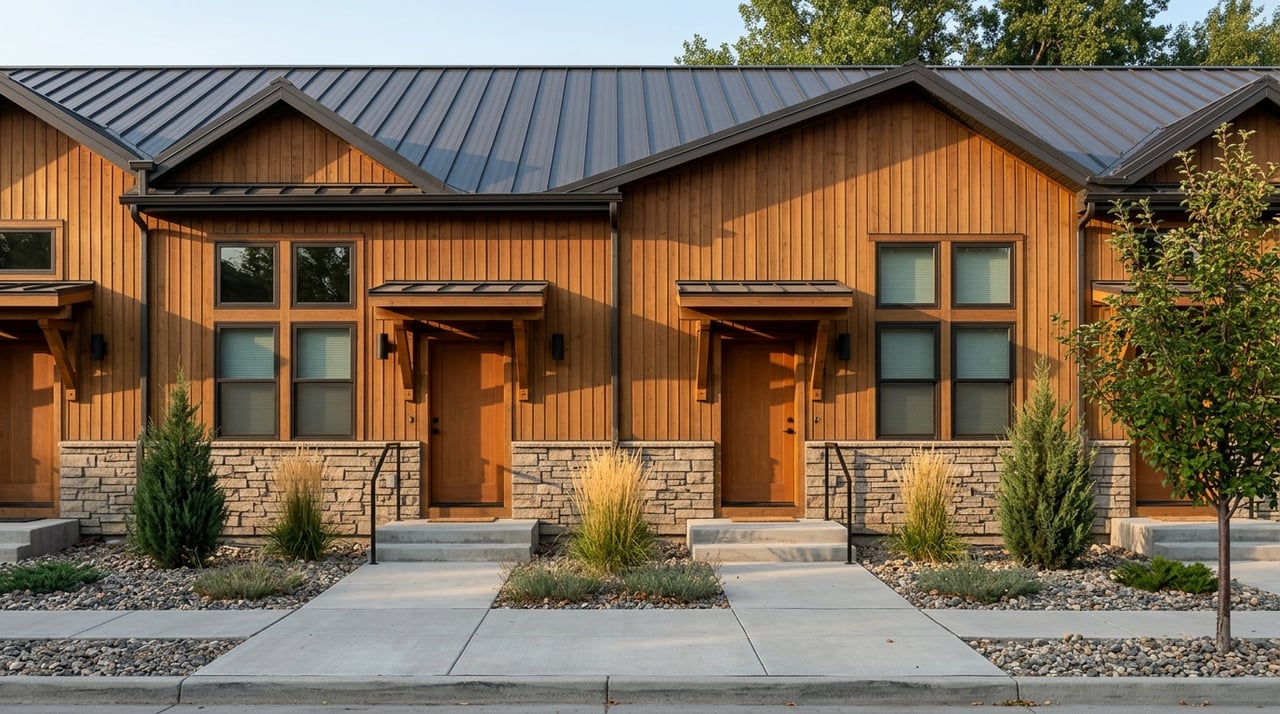
Investing in Billings Duplexes and Small Multi-Family
April 2, 2026
April 2, 2026
If you want rental income in Billings without taking on a large apartment complex, a duplex, triplex, or fourplex can be a smart place to start. These smaller multi-family properties can offer a mix of cash flow, flexibility, and long-term value, but only if you buy with clear numbers and careful due diligence. If you are thinking about investing in small multi-family properties in Billings, this guide will help you understand local demand, how to evaluate a deal, and what to check before you close. Let’s dive in.
Billings offers a useful mix of population size, renter demand, and economic stability. According to the U.S. Census QuickFacts for Billings, the city had 121,483 residents and 50,994 households as of July 1, 2024, with a 64.8% owner-occupied housing rate. That suggests about 35.2% of households are renter households, which supports an ongoing need for rental housing.
Rental demand also appears relatively steady. The City of Billings’ FY2025-2029 Consolidated Plan, cited in the same local housing context, notes a rental vacancy rate just under 6% in November 2024 and around 5% in recent years. For you as an investor, that can point to a market where well-positioned units may continue to find tenants without relying on overly aggressive rent assumptions.
A rental market is stronger when local employment is broad-based, and Billings checks that box. The Billings metro employment data from the U.S. Bureau of Labor Statistics shows a 3.4% unemployment rate in December 2025. Major sectors included trade, transportation, and utilities; education and health services; government; and leisure and hospitality.
That matters because different industries support different types of renters. Some households relocate for work, some rent while deciding where they want to buy, and others prefer the flexibility of renting. Montana’s long-range projections also point to growth in healthcare, construction, retail trade, and accommodation and food services, with healthcare growth concentrated in urban centers such as Billings.
Small multi-family properties sit in an interesting middle ground. They are often easier to manage than a larger apartment asset, but they can generate more than one stream of rent. If one unit is vacant, the property may still have income coming in from the other units.
For some buyers, these properties also offer flexibility in how they are used. You may plan to hold the property as a long-term rental, or you may be looking for a building where rental income helps support the overall investment. Either way, the numbers need to work under realistic conditions, not best-case scenarios.
Before you get attached to a property, focus on the income math. A practical model starts with gross scheduled rent, subtracts vacancy and credit loss, adds other income, and then subtracts operating expenses to produce net operating income, or NOI. Fannie Mae’s definition of NOI follows this same basic framework.
This matters because seller projections can look stronger than actual performance. A property may seem attractive on paper, but once you apply a realistic vacancy factor, maintenance costs, and repair reserves, the picture can change quickly. The most important question is not whether a listing looks good at first glance. It is whether the property still works after conservative assumptions are applied.
When you review a rent roll, do not look at it in isolation. Compare in-place rents to broader local benchmarks before you assume easy upside. In Billings, the ACS data from Census QuickFacts lists median gross rent at $1,138.
You can also compare unit rents to the HUD FY2025 Fair Market Rents for the Billings HMFA, which are $904 for a studio, $948 for a one-bedroom, $1,226 for a two-bedroom, $1,685 for a three-bedroom, and $1,897 for a four-bedroom. For duplexes, triplexes, and fourplexes, these are helpful outside benchmarks when you want to test whether current rents seem low, high, or roughly in line with the market.
New investors sometimes focus heavily on gross rent and overlook operating costs. But repairs, turnover, utilities, insurance, and ongoing maintenance can reshape your returns. Even a fully leased property can underperform if expenses are not understood upfront.
That is why small multi-family underwriting should be grounded in what the property actually needs. If the numbers only work when vacancy is near zero and repairs are minimal, you may be looking at a deal with very little margin for error.
Condition is not just a maintenance issue. It can also affect your financing timeline and your risk profile. Fannie Mae’s Property Check guidance highlights how property-condition issues can surface early and create problems later in the process.
For you, the takeaway is simple: do not assume a small multi-family property is an easy purchase just because the unit count is low. Deferred maintenance, safety concerns, or questionable renovations can trigger delays, additional costs, or financing concerns.
A good-looking listing can still hide important issues. The real story often comes out during lease review, inspection, and permit research. This is where careful buyer representation can make a major difference.
Lease review should go beyond reading monthly rent amounts. Fannie Mae’s lease-audit guidance points to reviewing lease terms, renewal dates, deposits, concessions, tenant files, and cash ledgers or receipts journals. In practical terms, you want to verify that the rent roll matches the leases and that collections match what the seller says has been collected.
Pay close attention to:
If you discover gaps between the rent roll and the documentation, that can affect both valuation and your comfort level with the deal.
Physical inspections should focus on more than cosmetic appearance. Freddie Mac’s due diligence guidance emphasizes early warning signs tied to life-safety hazards and deferred maintenance. That same mindset is useful when you are evaluating a duplex, triplex, or fourplex in Billings.
A practical inspection checklist often includes:
These items can directly affect your repair budget, financing path, and ability to operate the property smoothly after closing.
In Billings, permit history can be especially important when a property has been remodeled or reconfigured. The City of Billings Certificate of Occupancy information states that a Certificate of Occupancy confirms required inspections were performed and the structure complies with adopted building codes. Some remodels or additions may instead receive a Certificate of Final Inspection.
The city also notes that required inspections and a Certificate of Occupancy must be obtained before water-service billing information is transferred. For you, that makes permit verification more than a technical detail. If units were added, converted, or substantially renovated, you should confirm the paperwork supports the property’s current use.
City and county compliance can influence both value and risk. The City of Billings Code Enforcement page notes that code enforcement covers land use, nuisance, sign, and parking regulations. Yellowstone County code enforcement is complaint-based within the county’s jurisdiction, including areas within 4.5 miles of city limits.
That means it is wise to check for visible or reported issues before closing. Open complaints, boarded structures, junk vehicles, chronic exterior maintenance problems, or improper storage can all signal extra work after purchase. Even if a property cash flows on paper, unresolved compliance issues can create friction and expense.
Some small multi-family properties may carry compliance obligations that affect rents and operations. The City of Billings monitoring and compliance information explains that assisted multifamily properties may be monitored for eligible occupants, federally compliant rents, and safe and sanitary condition.
If a property has city-assisted affordability restrictions or recorded obligations, market-rent assumptions may not apply to every unit. This is an important step for investors who are underwriting future income. Before you count on rent increases, verify whether any restrictions limit the property’s rent structure or occupancy requirements.
If you are evaluating several properties at once, it helps to use a repeatable process. A consistent screening method can help you avoid emotional decisions and stay focused on fundamentals.
When reviewing a duplex, triplex, or fourplex in Billings, ask:
A property does not need to be perfect to be worth pursuing. It does need to be understandable, supportable, and realistic.
Small multi-family investing is part numbers and part process. In Billings, that process can include rent-roll analysis, lease audits, permit checks, inspections, and city or county compliance review. Having local representation that understands income-capable properties can help you move from surface-level interest to a well-supported decision.
At Carey Chapman Real Estate, the approach is straightforward and practical. You get local market insight, consistent communication, and broker-led guidance tailored to the property type you are buying. If you are considering a duplex, triplex, or fourplex in Billings, Carey Chapman can help you evaluate opportunities with a clear eye on both value and due diligence.
Stay up to date on the latest real estate trends.

Trust her to guide you through Billings real estate with care, insight, and reliable service. With local knowledge and a client-first approach, she ensures your journey is smooth, confident, and rewarding.